
Seasonal guide · 5 min read
Getting a Sub-Zero through a Lafayette summer on the inland side of the Caldecott
Once you clear the Caldecott, the marine air drops away and Lafayette afternoons hit the 90s. A short, real checklist to keep a built-in Sub-Zero ahead of the heat.
Lafayette sits on the dry, inland edge of the Caldecott Tunnel, and that one geographic fact decides more about how a built-in Sub-Zero behaves here than the brand or the model ever will. Drive west and the marine layer keeps Berkeley and Oakland kitchens cool; drive east through the tunnel and the fog falls away, the hillsides above Happy Valley and Reliez Valley bounce afternoon sun back into the house, and summer highs settle into the 90s for weeks at a stretch.
A refrigerator does not care about the weather report — it cares about the air in the room around it. Here is the short, practical checklist we run on Lafayette homes before the first real heat wave, so a unit that coasts through spring does not stumble in August.
Clear the condenser before the heat arrives
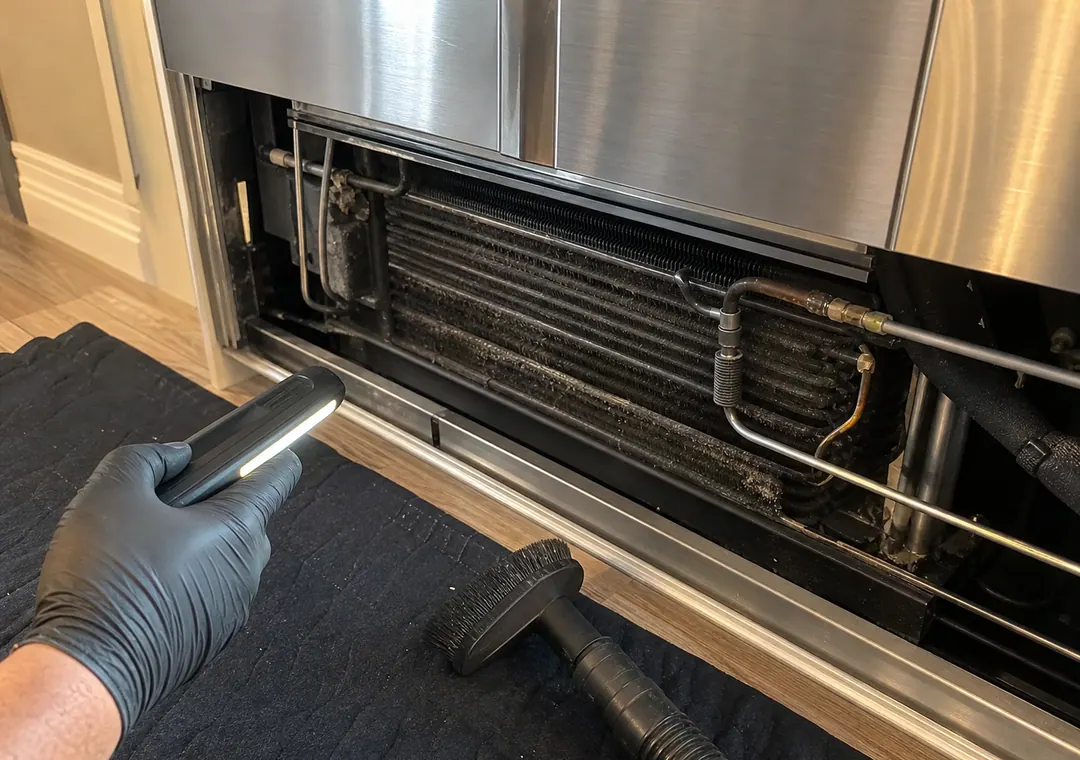
A built-in Sub-Zero rejects heat by pulling room air across a condenser coil, usually behind the upper grille. In a warm Lafayette kitchen the compressor already works harder, and a coil furred with dust and pet hair forces it to run longer and hotter still. The single most valuable thing a local owner can do is have that coil cleaned each spring, before the inland heat builds. A clean coil is the difference between a unit that holds 38 degrees on a 95-degree afternoon and one that drifts up by midweek.
Give the unit breathing room and watch the room temperature
Many of the great-room remodels common along the Trail and above the Reservoir tuck the refrigerator into a tall cabinet run that looks beautiful and breathes poorly. If the grille is blocked by a toe-kick panel, a basket, or a cabinet that was furred out during the remodel, the unit recirculates its own warm exhaust. We check that the airflow path is genuinely open. In west-facing kitchens that bake in the late sun, simply running the room a few degrees cooler in the afternoon takes real load off the compressor.
Check the gasket and the door habits
Heat is hardest on the door line. A gasket that seals fine in cool weather can let warm, dry inland air leak past once the kitchen climbs into the 80s, and the unit answers by running almost continuously. We inspect the gasket for stiffness and gaps, and we talk through the small habits that matter most in summer — not standing with the door open while the kitchen is hot, and giving the condenser a clear day after a big grocery or entertaining load. None of this is dramatic, but in a Lafayette kitchen it is the difference between an easy season and a service call in the worst week of August.
FAQ
Questions & answers
Why does my Lafayette fridge struggle in summer but not in Orinda or Berkeley?
Lafayette is on the inland side of the Caldecott, where the cooling marine layer never reaches and summer afternoons run hotter than the coastal East Bay. That extra heat loads the compressor, so a coil or gasket issue that stays hidden in a cooler town shows itself here.
When should I schedule a condenser cleaning?
Late spring is ideal — get the coil clean before the first inland heat wave so the unit goes into summer running cool. Call (925) 940-3576 to book a maintenance visit on our regular Highway 24 swing through Lafayette.
Go deeper
More Lafayette guides
Does That Sub-Zero Repair Company Really Cover Lafayette? A Lamorinda Coverage Check
Three tests that prove a Sub-Zero repair company really covers Lamorinda: today's start point, drive time from the listed address, and Highway 24 fees.
Read the guide → Dual refrigeration · 4 minSub-Zero Dual Refrigeration Explained: Why One Side Warms
Sub-Zero uses two independent sealed systems for fridge and freezer. Why one side warms while the other stays cold, and what repair really costs in Lafayette.
Read the guide → Repair vs replace · 5 minThe Repair-or-Replace Math for an Aging Sub-Zero in Lafayette
Run the numbers on an aging Sub-Zero in Lafayette: repair cost bands by age bracket, the real 94549 replacement total, and the 50 percent rule worked out.
Read the guide →Rather leave it to a specialist?
Have the failing compartment and model number ready, and you will get a real first opinion — not a sales pitch.