
Thomas G., Happy Valley
“Our wine column was drifting three degrees above set point and risking the collection. He logged each zone, found a failing zone sensor, and the storage temp is rock steady now in our Happy Valley home.”
Wine column hub
When a Lafayette Sub-Zero wine column drifts several degrees above set point, Lafayette Sub-Zero Appliance Repair logs each zone, then checks sensor placement, fan airflow and bottles crowding the cold path before ordering controls, with warm Lamorinda afternoons in mind across 94549. Reach (925) 940-3576 for a collection-safe zone diagnosis.
A Lafayette Sub-Zero wine column that drifts several degrees should be logged by zone before parts are ordered. Useful evidence includes set point, actual temperature, door-seal condition, condenser airflow, recent door openings and whether bottles near the sensor area are blocking airflow. Collector risk makes stable temperature more important than a quick reset.
| Scenario | Urgency | Safe owner action | Technician evidence |
|---|---|---|---|
| Wine zone drifting 4-8 F | Same day or next day depending on food risk | Record fresh-food and freezer readings, then stop repeated resets. | Fan response, condenser condition, gasket line, thermistor and frost pattern. |
| Freezer softening | High | Move food and note any visible frost or fan noise clues. | Evaporator fan, defrost path, sealed-system evidence and electrical data. |
| Wine column drifting | Medium to high for collections | Log target and actual zone readings before moving bottles. | Door seal, sensor, airflow, fan and control response by model family. |
| Ice maker hollow cubes | Routine unless leaking | Keep a cube sample and note filter or water-pressure changes. | Fill tube, inlet valve, module, freezer temperature and water path. |
| Cabinet pull-out risk | Prepared visit | Have floor transitions and lower grille access details ready. | Panel fasteners, water line slack, power access and safe reseat plan. |
| Wine / food risk | Threshold | Next step |
|---|---|---|
| Fresh food above 40 F for 2+ hours | Food-safety risk | Move perishables, record readings and request prepared diagnosis. |
| Freezer softening above 20 F | Escalating loss risk | Protect food, note any visible frost pattern and stop repeated resets. |
| Wine zone 4-8 F above set point | Collection stability risk | Log zone, target, actual reading and door-open history before parts are ordered. |
| Warm unit before guests arrive | Event timing risk | Record the model tag, temperatures, alarm state and cabinet access details if they are safely available. |
| Electrical smell, breaker trip or active leak | Safety risk | Stop using the appliance and request urgent guidance instead of testing it further. |
Published planning ranges
| Service in Lafayette | Published planning range | Time window | Service note |
|---|---|---|---|
| Diagnostic / service call | $175-$250 | 45-90 min | Includes model, temperatures, airflow and visual checks. |
| Door gasket / frost-line repair | $450-$950 | 1-3 hours | Depends on model, hinge condition and gasket availability. |
| Ice maker / water line repair | $275-$850 | 1-3 hours | Separates valve, fill tube, filter, module and temperature causes. |
| Control board / sensor diagnosis | $350-$1,250 | 1-4 hours | Quoted only after model-specific electrical proof. |
| Compressor / sealed system | $1,600-$3,800 | 2-6 hours plus parts | Requires pressure and electrical evidence before quote. |
Planning ranges help Lafayette homeowners compare likely repair paths. Final quote depends on model, part availability, cabinet access, water-line condition and confirmed diagnosis.
Customer Reviews
Recent feedback from Lafayette, Happy Valley and Reliez Valley homeowners after Sub-Zero Sub-Zero wine storage temperature diagnosis service.
“Our wine column was drifting three degrees above set point and risking the collection. He logged each zone, found a failing zone sensor, and the storage temp is rock steady now in our Happy Valley home.”
“The 424 wine unit kept warming on the top zone. He checked the fan and set point against actual readings before swapping anything. Bottles are back at the right temperature.”
“Careful, collector-minded service. He moved the high-value bottles off the warm edge before working and corrected the temperature drift without disturbing the rest of the storage.”
| Wine symptom | Useful range / threshold | Safe owner action | Technician evidence |
|---|---|---|---|
| One zone 2-3 F high after stocking | Watch recovery over several hours. | Avoid repeated setting changes; log target and actual. | Door openings, thermal load and sensor area airflow. |
| One zone 4-8 F high repeatedly | Service-worthy drift. | Move high-value bottles away from warm edge and log readings. | Fan, sensor, gasket, condenser airflow and control response. |
| Both zones warm | Higher risk. | Protect collection and record room conditions. | Condenser, compressor, control, airflow and electrical proof. |
| Display reads normal, bottle probe does not | Measurement conflict. | Use a reliable independent thermometer and log location. | Sensor calibration, bottle placement and air circulation. |
| Condensation around wine door | Seal risk. | Photograph gasket and door alignment. | Gasket compression, hinge, panel weight and humidity load. |
Wine evidence
Wine storage is not only a cold-air problem. A wine column needs stable temperature, controlled recovery and airflow that is not blocked by bottle placement. For Lafayette homes that host dinners or store higher-value bottles, a few degrees of repeated drift is worth documenting before it becomes a collection problem.
Useful details include the model tag, both zone displays, bottle placement near sensor areas, gasket corners and lower grille airflow. If bottles must be moved, record the shelf layout first so the collection can be restored without unnecessary handling.
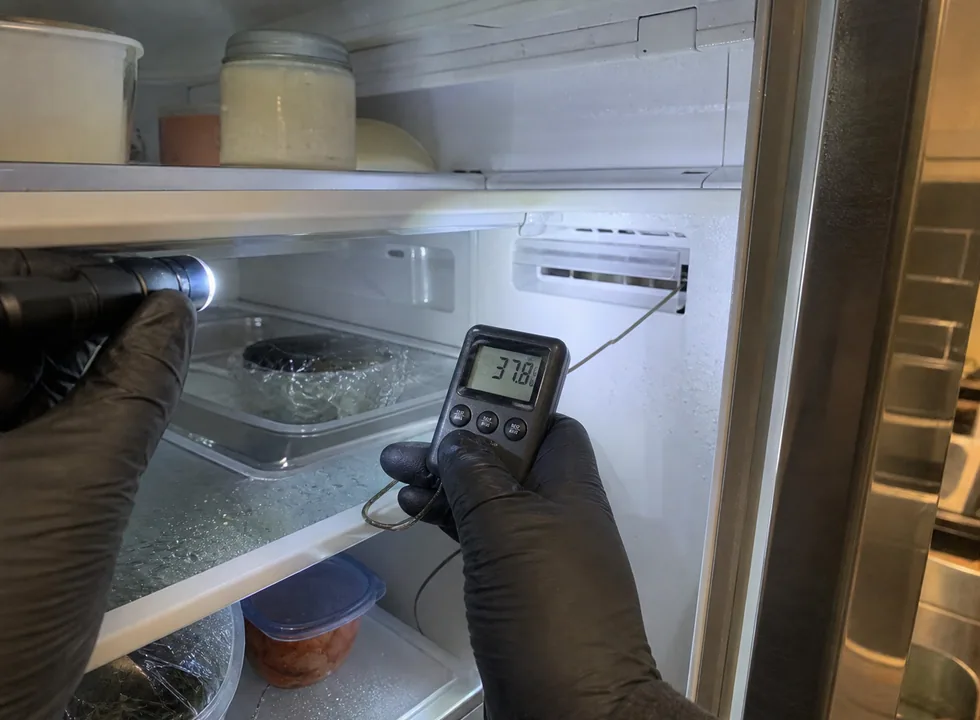
Dry-season dust around Lafayette Reservoir routes can reduce condenser efficiency, and warm Lamorinda afternoons can make a borderline wine column drift during hosting hours. The maintenance page links wine-zone logs to condenser checks, gasket review and pre-event readiness.
A wine column page becomes more useful when the measurements are explicit. A Lafayette owner should log the display set point, display actual reading, independent thermometer reading, bottle location, door-open history and time of day for each affected zone. The goal is to identify repeated drift, not to chase a single recovery cycle after stocking.
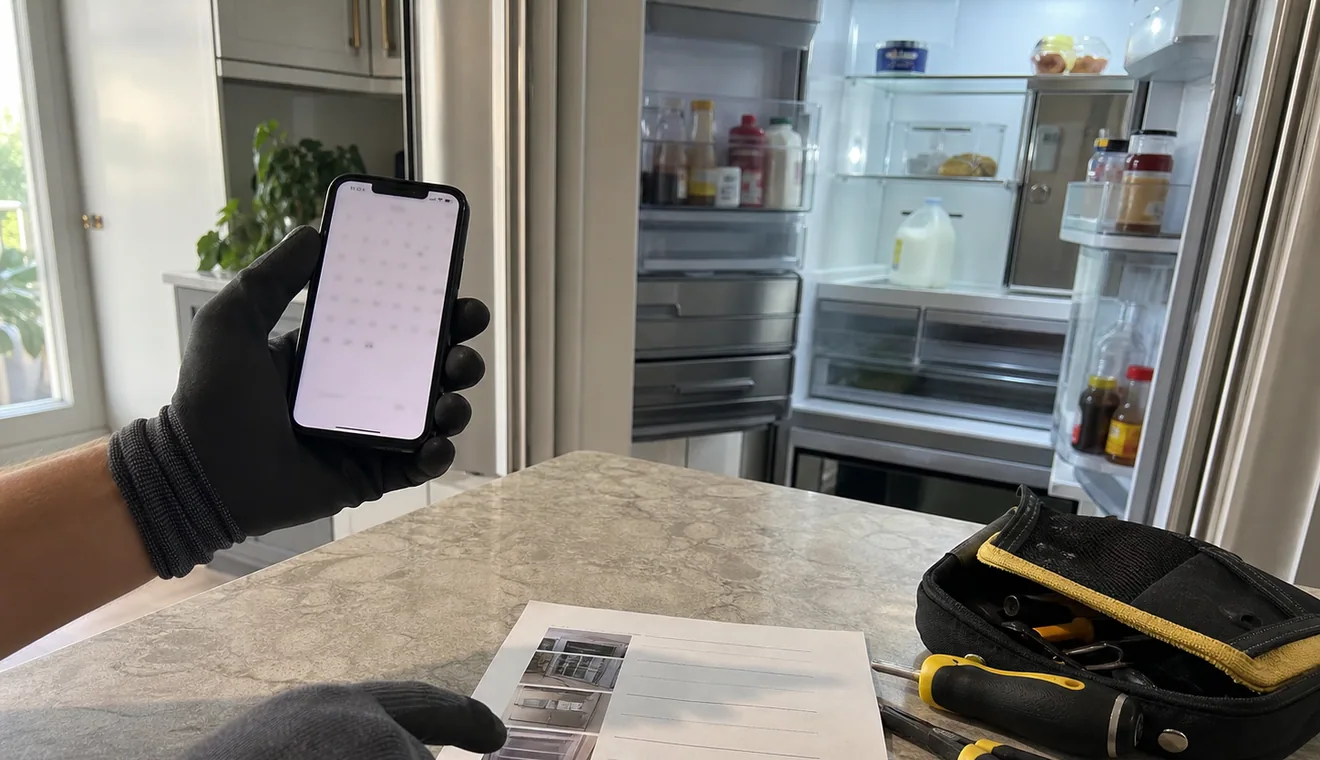
If the top zone is stable and the lower zone drifts, the evidence may point toward zone airflow, fan behavior, sensor placement or bottle loading. If both zones drift together, condenser airflow, compressor behavior, controls and ambient heat become more important. The log also helps decide whether the visit should focus on protecting a collection before an event or scheduling a standard diagnostic window. A completed worksheet is exactly what the Lafayette contact and booking page asks for before a collection-safe visit is scheduled.
| Log field | Example entry | Why it matters |
|---|---|---|
| Zone | Upper red zone or lower white zone. | Separates one-zone sensor or fan issues from whole-unit problems. |
| Set point / actual | 55 F set, 62 F actual. | Shows size of drift and whether it crosses service threshold. |
| Independent reading | Probe in center shelf, 60 F. | Checks display accuracy and bottle-level risk. |
| Door and loading history | Restocked two shelves 3 hours ago. | Separates normal recovery from mechanical drift. |
| Event risk | Dinner service tomorrow evening. | Changes urgency and bottle protection plan. |
Lafayette route logic
Hillside access, larger built-in kitchens and pre-event scheduling make model-tag details and cabinet access notes useful before the route is set.
Afternoon heat, dust and route timing can change whether same-day triage or next-day prepared service is more realistic.
Family kitchens often need practical freezer, ice maker and gasket checks that protect floors and panels during routine service.
Homes near the Lafayette-Moraga Trail benefit from clear parking, gate and access notes so tools reach the built-in safely.
Visible answers
Repeated drift of several degrees, especially 4-8 F above target or a zone that fails to recover, is worth diagnosis. A single stocking event can recover normally, but repeated drift needs zone logs, door-seal checks and airflow evidence.
Not exactly. Wine storage is about stable temperature by zone, not simply making food cold. Fan behavior, bottle placement, sensor location, control response and door sealing all matter.
Move high-value bottles away from a warm area or immediate work zone, but record shelf layout first. The technician benefits from knowing how bottles were placed when the drift occurred.
Record set point, displayed temperature and an independent thermometer reading by zone, plus time of day and recent door openings. Do not rely only on one display snapshot.
Yes. Bottles near sensor or fan paths can change recovery behavior. The visit should check airflow, fan operation, sensor readings and door sealing before control parts are ordered.
It can be if guests are expected, a collection is warming or the unit will be opened frequently. Have target and actual readings, zone affected, model tag and door/gasket details ready.
A post-repair zone log is stronger than a quick display check. The invoice should identify the confirmed component, model-matched part and the readings used to verify stability.
Call now or book online for a diagnostic visit.