
Victoria H., Happy Valley
“Fridge died the morning of a big dinner. With the model and temps ready, he got out same-day, found a stuck evaporator fan, and had it cold before guests arrived in Happy Valley.”
Hospitality triage hub
Before guests or an event in Lafayette, a warm Sub-Zero should be triaged by compartment temperatures, food-safety risk, model number and whether the unit is still recovering. Same-day service is most realistic when the request includes model tag, fresh-food/freezer readings, alarm state and lower-grille or water-path details.
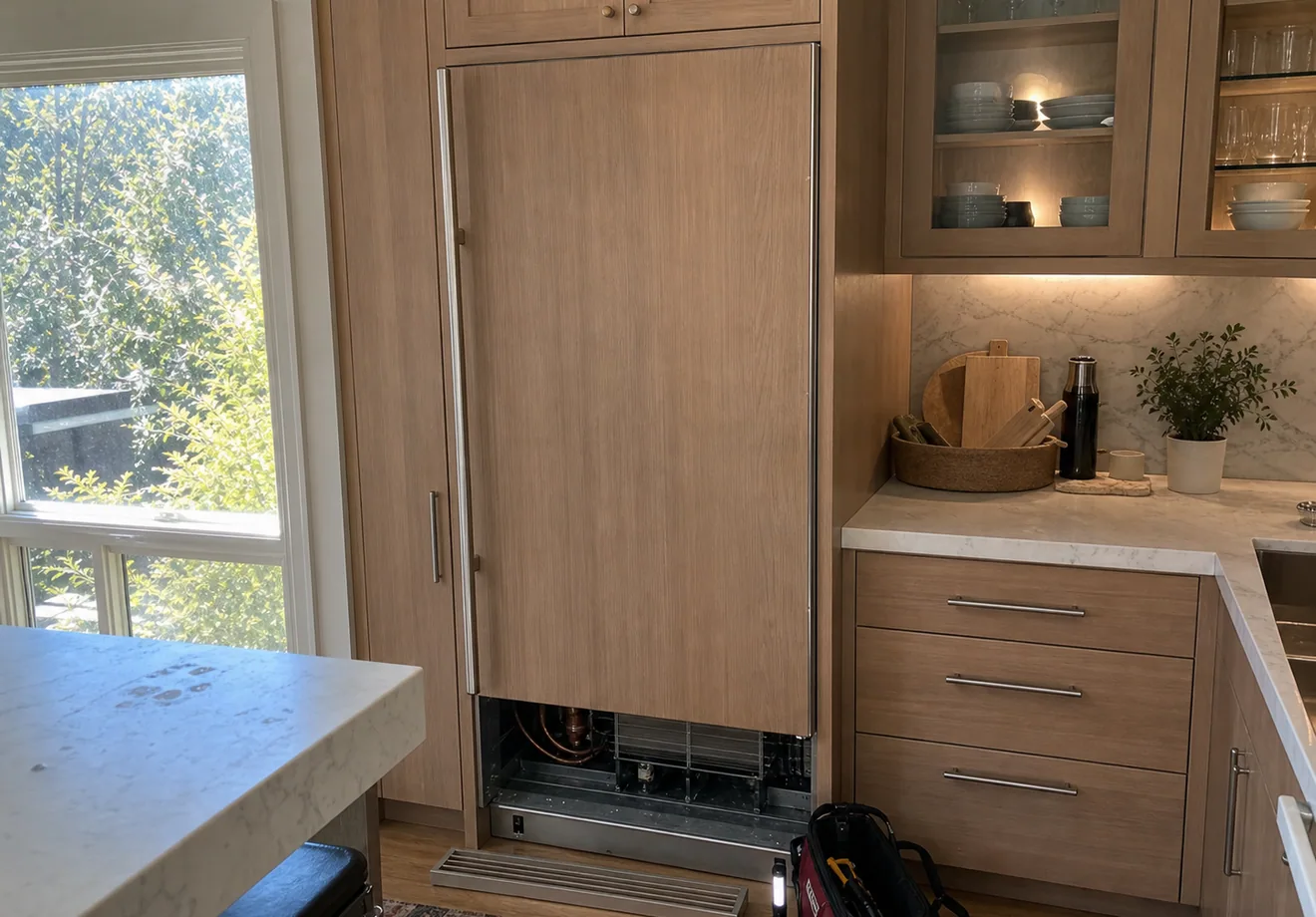
| Scenario | Urgency | Safe owner action | Technician evidence |
|---|---|---|---|
| Guests arriving within 24-48 hours | Same day or next day depending on food risk | Record fresh-food and freezer readings, then stop repeated resets. | Fan response, condenser condition, gasket line, thermistor and frost pattern. |
| Freezer softening | High | Move food and note any visible frost or fan noise clues. | Evaporator fan, defrost path, sealed-system evidence and electrical data. |
| Wine column drifting | Medium to high for collections | Log target and actual zone readings before moving bottles. | Door seal, sensor, airflow, fan and control response by model family. |
| Ice maker hollow cubes | Routine unless leaking | Keep a cube sample and note filter or water-pressure changes. | Fill tube, inlet valve, module, freezer temperature and water path. |
| Cabinet pull-out risk | Prepared visit | Have floor transitions and lower grille access details ready. | Panel fasteners, water line slack, power access and safe reseat plan. |
| Wine / food risk | Threshold | Next step |
|---|---|---|
| Fresh food above 40 F for 2+ hours | Food-safety risk | Move perishables, record readings and request prepared diagnosis. |
| Freezer softening above 20 F | Escalating loss risk | Protect food, note any visible frost pattern and stop repeated resets. |
| Wine zone 4-8 F above set point | Collection stability risk | Log zone, target, actual reading and door-open history before parts are ordered. |
| Warm unit before guests arrive | Event timing risk | Record the model tag, temperatures, alarm state and cabinet access details if they are safely available. |
| Electrical smell, breaker trip or active leak | Safety risk | Stop using the appliance and request urgent guidance instead of testing it further. |
Published planning ranges
| Service in Lafayette | Published planning range | Time window | Service note |
|---|---|---|---|
| Diagnostic / service call | $175-$250 | 45-90 min | Includes model, temperatures, airflow and visual checks. |
| Door gasket / frost-line repair | $450-$950 | 1-3 hours | Depends on model, hinge condition and gasket availability. |
| Ice maker / water line repair | $275-$850 | 1-3 hours | Separates valve, fill tube, filter, module and temperature causes. |
| Control board / sensor diagnosis | $350-$1,250 | 1-4 hours | Quoted only after model-specific electrical proof. |
| Compressor / sealed system | $1,600-$3,800 | 2-6 hours plus parts | Requires pressure and electrical evidence before quote. |
Planning ranges help Lafayette homeowners compare likely repair paths. Final quote depends on model, part availability, cabinet access, water-line condition and confirmed diagnosis.
Customer Reviews
Recent feedback from Lafayette, Happy Valley and Reliez Valley homeowners after Sub-Zero Pre-event Sub-Zero emergency triage service.
“Fridge died the morning of a big dinner. With the model and temps ready, he got out same-day, found a stuck evaporator fan, and had it cold before guests arrived in Happy Valley.”
“Pre-event panic over a warm freezer. He triaged over the phone, told me what food to move, then arrived and fixed the defrost issue with hours to spare in Reliez Valley.”
“Same-evening save before a holiday. Honest that some calls slip to next day, but he made ours work and explained the repair as he went. Lifesaver.”
| Event scenario | Urgency | Safe owner action | Technician evidence |
|---|---|---|---|
| Dinner or guests within 24 hours | High if temperatures are rising. | Move high-risk food and record readings. | Model, alarm state, condenser airflow and recovery behavior. |
| Holiday week with full refrigerator | High planning risk. | Reduce door openings and check grille and model-tag details. | Food load, gasket, fan response and cabinet access. |
| Wine service planned | High if zone drift repeats. | Move valuable bottles away from warm edge and log zones. | Zone sensor, fan, gasket and airflow proof. |
| Ice shortage before event | Medium unless leaking. | Photograph cubes and note filter history. | Water valve, fill tube, module and freezer temperature. |
| Routine maintenance before hosting | Prepared next-day is often safer. | Use checklist and avoid unnecessary resets. | Condenser, gaskets, filters, drain and temperature baseline. |
Timing
Same-day triage is most realistic when the request already includes model tag, temperatures, alarm state, symptoms and cabinet access notes. That information lets the route decide whether the visit can stabilize risk, complete a likely repair or needs parts ordered.
Next-day can be safer when a built-in may need movement, when panels or floors need protection, when the wine collection must be handled carefully or when the symptom points to a part that should be verified before the route arrives. Hillside streets add their own timing math — the Happy Valley not-cooling guide covers the access notes that keep a same-day promise honest.
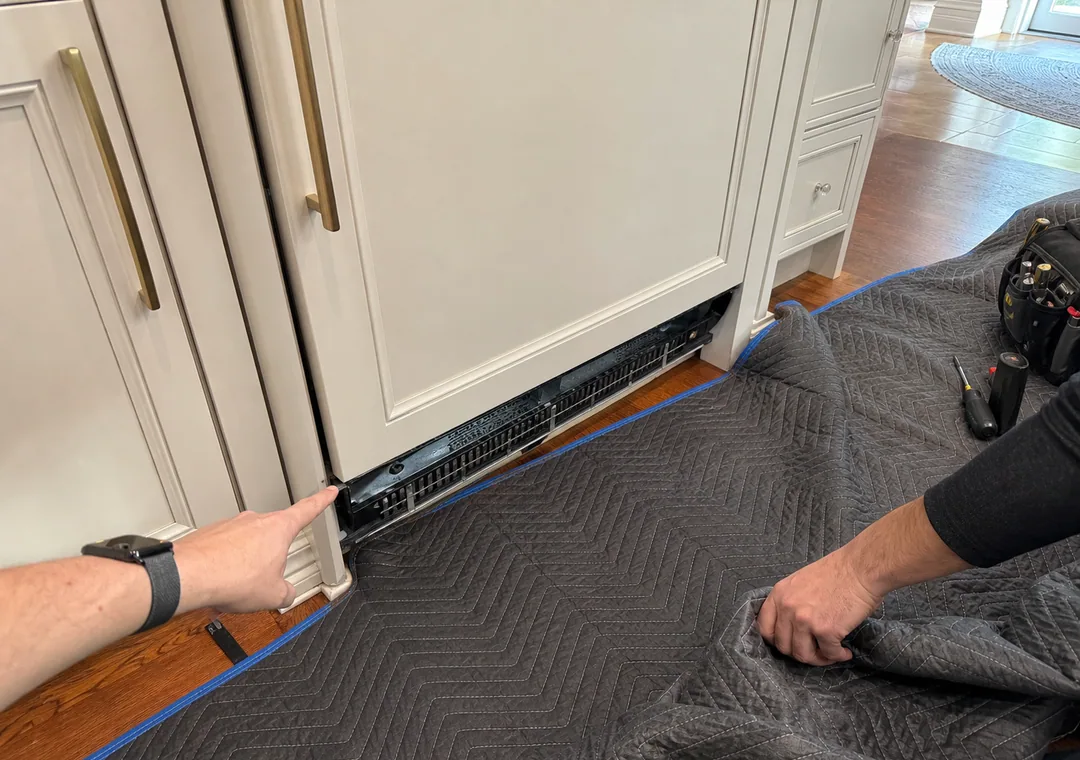
A pre-event request should read like a short diagnostic report, not a panic message. Start with the event deadline, then give model family if known, current fresh-food and freezer readings, wine-zone readings if relevant, alarm state, whether food has been moved and whether the unit is still recovering. Add one line about cabinet access, parking, stairs or gates. Send it through the contact and booking page or read it out when you call.
This script helps the operator decide whether the first visit should prioritize food safety, wine protection, ice production, airflow, water path or sealed-system screening. It also keeps the site honest: urgency is real, but a same-day promise without model, temperature and access evidence would not be reliable.
| Request line | Useful wording | Why it helps |
|---|---|---|
| Deadline | Guests arrive Saturday at 5 pm. | Separates event triage from routine service. |
| Temperatures | Fresh food 48 F, freezer 18 F at 10 am. | Shows risk and recovery path. |
| Model proof | BI-48 family, tag details noted. | Guides likely parts and access. |
| Cabinet note | Panel-ready, tight stone floor, lower grille condition noted. | Plans protection and route time. |
| Food or wine risk | Wine lower zone at 62 F, bottles moved. | Prioritizes collection and food safety. |
Lafayette route logic
Hillside access, larger built-in kitchens and pre-event scheduling make model-tag details and cabinet access notes useful before the route is set.
Afternoon heat, dust and route timing can change whether same-day triage or next-day prepared service is more realistic.
Family kitchens often need practical freezer, ice maker and gasket checks that protect floors and panels during routine service.
Homes near the Lafayette-Moraga Trail benefit from clear parking, gate and access notes so tools reach the built-in safely.
Visible answers
Same-day service is most realistic when the request includes the model tag, fresh-food and freezer temperatures, alarm state, symptoms and access notes. The site does not promise every same-day request because parts, route timing, hillside access and cabinet pull-out risk can change the safest schedule.
Record temperatures, protect food or wine, note the model tag and symptom, and write down alarm timing. The first goal is risk triage, not guessing a part.
No. Same-day can diagnose, stabilize or complete some repairs, but sealed-system evidence, special parts or cabinet pull-out risk may require a prepared follow-up.
Move perishable food to safe cold storage and record how long it was above 40 F. Food safety comes before preserving diagnostic evidence.
Move high-value bottles from the warm area, log zone temperatures and record shelf layout. Avoid blocking the sensor area when returning bottles.
No. Frequent door openings slow recovery and muddy the evidence. Use timed readings and keep the door closed between checks.
Next-day may be better when cabinet movement, floor protection, part verification or careful wine handling is likely. A prepared visit can prevent a rushed access mistake.
Call now or book online for a diagnostic visit.