
Andrew F., Burton Valley
“The alarm kept flashing and I almost kept resetting it. He read the error code, traced it to the defrost sensor, and explained what the alarm actually meant. Clear and reassuring here in Burton Valley.”
Symptom page
A flashing code or alarm on a Lafayette Sub-Zero usually means a model-specific sensor, door, fan or temperature-recovery fault, so Lafayette Sub-Zero Appliance Repair photographs the display and logs compartment readings in Reliez Valley and 94549 before any reset clears the evidence. Call (925) 940-3576 to capture the code first.
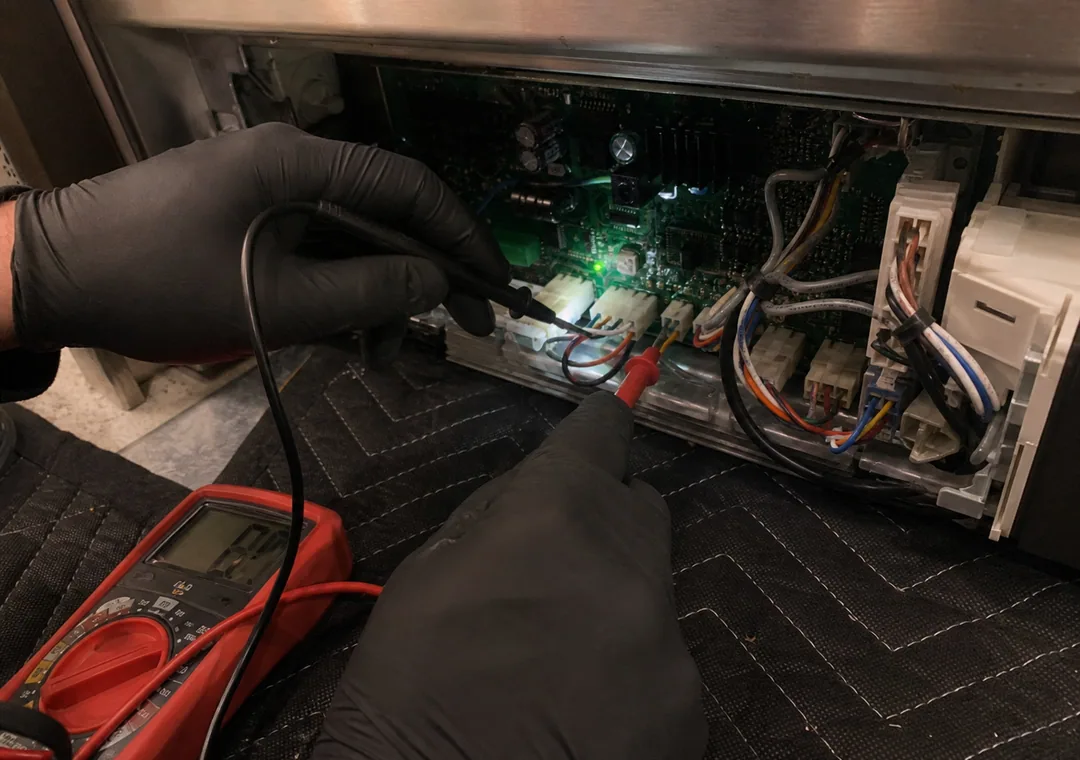
Sub-Zero codes are read by your model and serial tag, not a generic chart, because a flashing "Service" indicator, "Vacuum Condenser" reminder or over-temp alarm means different things across model families. In Lafayette, photograph the display and log Reliez Valley compartment temperatures before any reset, then verify by model before naming a part.
Quick reference
A plain-language list of the Sub-Zero alarms and display behaviors we see most across Lafayette and Lamorinda. It is a reasoning aid, not a code dictionary — exact codes differ by model and serial, so verify the real behavior against your rating plate before acting.
| Alarm / display behavior | What it usually points to | What to do |
|---|---|---|
| Flashing or solid “Service” indicator | A stored fault, sensor input or board condition — meaning varies by model family. | Photograph it, leave power on, and verify by model/serial before any reset. |
| “Vacuum Condenser” reminder or long run times | Condenser packed with Reliez Valley summer dust restricting airflow. | Pull the lower grille, clean the condenser, and re-probe cycling after. |
| Frost line or condensation at the door edge | Door gasket leak or seal swelling — common in hillside Happy Valley kitchens. | Paper-drag test and seal inspection; OEM gasket or hinge adjustment. |
| Over-temp / high-temp alarm after a long door-open | Normal recovery, or a marginal temperature sensor. | Allow a full recovery cycle, then re-probe before replacing a thermistor. |
| Fresh-food warm while the freezer still holds | Evaporator fan, frosted coil or air damper — not necessarily the sealed system. | Watch fan rotation and airflow; defrost, fan or damper repair as measured. |
| Blank, frozen or unresponsive display | Control board, ribbon connector or power supply. | Confirm supply voltage; reseat or replace the confirmed board, not by guess. |
Newer Sub-Zero models may show an EC-style electronic code; the meaning is model-specific, so verify it against your model and serial rather than a generic chart. Call (925) 940-3576 before resetting.
| Scenario | Urgency | Safe owner action | Technician evidence |
|---|---|---|---|
| Repeating alarm or display code | Same day or next day depending on food risk | Record fresh-food and freezer readings, then stop repeated resets. | Fan response, condenser condition, gasket line, thermistor and frost pattern. |
| Freezer softening | High | Move food and note any visible frost or fan noise clues. | Evaporator fan, defrost path, sealed-system evidence and electrical data. |
| Wine column drifting | Medium to high for collections | Log target and actual zone readings before moving bottles. | Door seal, sensor, airflow, fan and control response by model family. |
| Ice maker hollow cubes | Routine unless leaking | Keep a cube sample and note filter or water-pressure changes. | Fill tube, inlet valve, module, freezer temperature and water path. |
| Cabinet pull-out risk | Prepared visit | Have floor transitions and lower grille access details ready. | Panel fasteners, water line slack, power access and safe reseat plan. |
| Wine / food risk | Threshold | Next step |
|---|---|---|
| Fresh food above 40 F for 2+ hours | Food-safety risk | Move perishables, record readings and request prepared diagnosis. |
| Freezer softening above 20 F | Escalating loss risk | Protect food, note any visible frost pattern and stop repeated resets. |
| Wine zone 4-8 F above set point | Collection stability risk | Log zone, target, actual reading and door-open history before parts are ordered. |
| Warm unit before guests arrive | Event timing risk | Record the model tag, temperatures, alarm state and cabinet access details if they are safely available. |
| Electrical smell, breaker trip or active leak | Safety risk | Stop using the appliance and request urgent guidance instead of testing it further. |
Published planning ranges
| Service in Lafayette | Published planning range | Time window | Service note |
|---|---|---|---|
| Diagnostic / service call | $175-$250 | 45-90 min | Includes model, temperatures, airflow and visual checks. |
| Door gasket / frost-line repair | $450-$950 | 1-3 hours | Depends on model, hinge condition and gasket availability. |
| Ice maker / water line repair | $275-$850 | 1-3 hours | Separates valve, fill tube, filter, module and temperature causes. |
| Control board / sensor diagnosis | $350-$1,250 | 1-4 hours | Quoted only after model-specific electrical proof. |
| Compressor / sealed system | $1,600-$3,800 | 2-6 hours plus parts | Requires pressure and electrical evidence before quote. |
Planning ranges help Lafayette homeowners compare likely repair paths. Final quote depends on model, part availability, cabinet access, water-line condition and confirmed diagnosis.
Customer Reviews
Recent feedback from Lafayette, Happy Valley and Reliez Valley homeowners after Sub-Zero Sub-Zero alarm and error-code diagnosis service.
“The alarm kept flashing and I almost kept resetting it. He read the error code, traced it to the defrost sensor, and explained what the alarm actually meant. Clear and reassuring here in Burton Valley.”
“A high-temp alarm during a heat spell turned out to be a clogged condenser, not a board failure. He fixed the real cause rather than just clearing the display on our Happy Valley unit.”
“He noted the alarm timing before doing any reset, which helped pinpoint a failing control sensor. Methodical work and a fair price.”
| Alarm situation | Owner action | Technician evidence | Related page |
|---|---|---|---|
| High temperature alarm | Record compartment readings and door history. | Temperature recovery, fan, gasket and airflow. | Not cooling |
| Door ajar or condensation | Photograph door line and gasket. | Switch, gasket, hinge and alignment. | Gasket guide |
| Repeating code after reset | Photograph code before another reset. | Model-specific service data and electrical checks. | Model guide |
| Control display erratic | Note power event and timing. | Wiring, board, sensor and voltage evidence. | Cost guide |
Reset caution
Resetting can be useful after a documented event, but repeated resets erase the timing story. The technician needs to know when the alarm appeared, what the temperatures were and whether it returned after the door stayed closed.
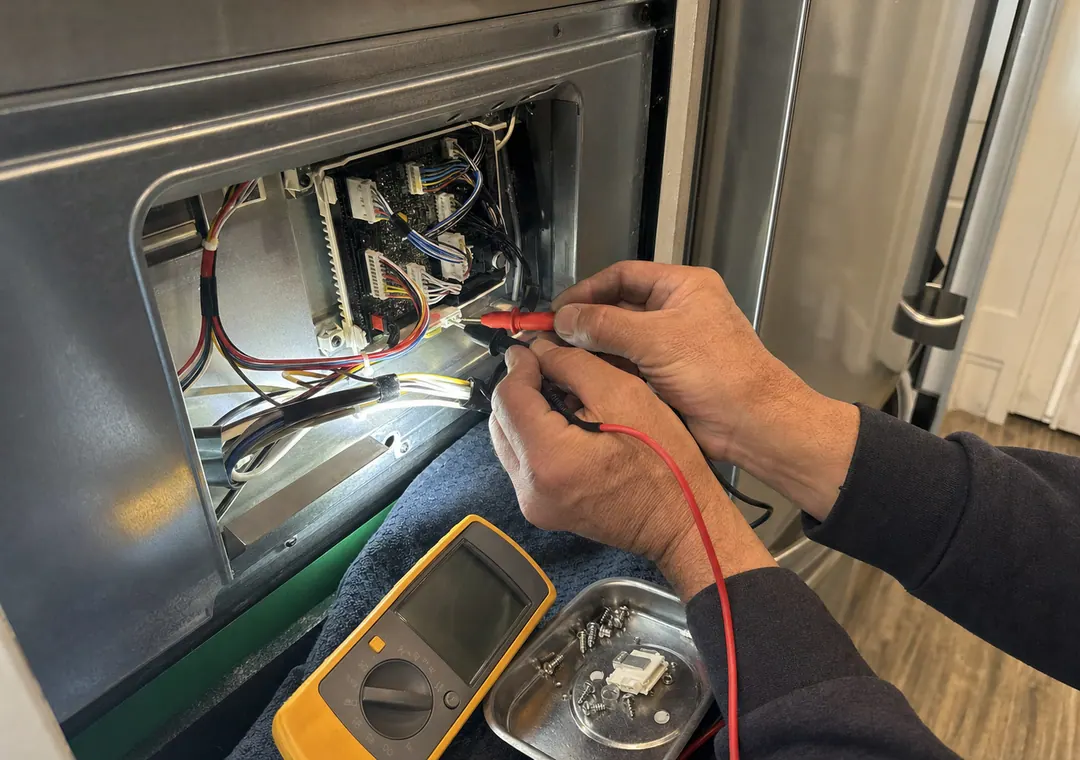
A control board should be quoted only after model-specific electrical proof. Door, airflow, fan, sensor and temperature recovery evidence can all trigger alarms without the board being the cause.
Lafayette route logic
Hillside access, larger built-in kitchens and pre-event scheduling make model-tag details and cabinet access notes useful before the route is set.
Afternoon heat, dust and route timing can change whether same-day triage or next-day prepared service is more realistic.
Family kitchens often need practical freezer, ice maker and gasket checks that protect floors and panels during routine service.
Homes near the Lafayette-Moraga Trail benefit from clear parking, gate and access notes so tools reach the built-in safely.
Visible answers
Sometimes it narrows the path, but a code alone should not be the only evidence. Model, temperature history and electrical checks matter.
Photograph it first and record temperatures. If the unit is warming, leaking or showing electrical symptoms, request guidance before clearing evidence.
No. Door seals, airflow, fans, sensors, power events and room conditions can trigger warnings depending on model and history.
Have display details, model tag, compartment temperatures and a short timeline of when the alarm started and whether it returned after reset.
Yes, especially when food is above 40 F, freezer contents are softening or guests are expected soon. Protect food first, then preserve timing evidence.
Control board or sensor diagnosis is published in the $350-$1,250 planning range after electrical proof. A simple airflow, door or reset-history issue may follow a different path.
Call now or book online for a diagnostic visit.