
Frank D., Upper Happy Valley
“Our 20-year-old built-in had a sealed-system failure and he laid out repair versus replace honestly. We repaired it because the custom panels would have been a nightmare to redo in our Upper Happy Valley kitchen.”
Decision hub
A Lafayette Sub-Zero repair-vs-replace decision should compare the verified failure, unit age, part availability, sealed-system evidence, cabinet disruption and event timing. A $450-$950 gasket repair is a different decision than $1,600-$3,800 sealed-system work, especially when custom panels, floors and the appliance opening would be disturbed.
| Scenario | Urgency | Safe owner action | Technician evidence |
|---|---|---|---|
| 15-25 year old built-in with major symptom | Same day or next day depending on food risk | Record fresh-food and freezer readings, then stop repeated resets. | Fan response, condenser condition, gasket line, thermistor and frost pattern. |
| Freezer softening | High | Move food and note any visible frost or fan noise clues. | Evaporator fan, defrost path, sealed-system evidence and electrical data. |
| Wine column drifting | Medium to high for collections | Log target and actual zone readings before moving bottles. | Door seal, sensor, airflow, fan and control response by model family. |
| Ice maker hollow cubes | Routine unless leaking | Keep a cube sample and note filter or water-pressure changes. | Fill tube, inlet valve, module, freezer temperature and water path. |
| Cabinet pull-out risk | Prepared visit | Have floor transitions and lower grille access details ready. | Panel fasteners, water line slack, power access and safe reseat plan. |
| Wine / food risk | Threshold | Next step |
|---|---|---|
| Fresh food above 40 F for 2+ hours | Food-safety risk | Move perishables, record readings and request prepared diagnosis. |
| Freezer softening above 20 F | Escalating loss risk | Protect food, note any visible frost pattern and stop repeated resets. |
| Wine zone 4-8 F above set point | Collection stability risk | Log zone, target, actual reading and door-open history before parts are ordered. |
| Warm unit before guests arrive | Event timing risk | Record the model tag, temperatures, alarm state and cabinet access details if they are safely available. |
| Electrical smell, breaker trip or active leak | Safety risk | Stop using the appliance and request urgent guidance instead of testing it further. |
Published planning ranges
| Service in Lafayette | Published planning range | Time window | Service note |
|---|---|---|---|
| Diagnostic / service call | $175-$250 | 45-90 min | Includes model, temperatures, airflow and visual checks. |
| Door gasket / frost-line repair | $450-$950 | 1-3 hours | Depends on model, hinge condition and gasket availability. |
| Ice maker / water line repair | $275-$850 | 1-3 hours | Separates valve, fill tube, filter, module and temperature causes. |
| Control board / sensor diagnosis | $350-$1,250 | 1-4 hours | Quoted only after model-specific electrical proof. |
| Compressor / sealed system | $1,600-$3,800 | 2-6 hours plus parts | Requires pressure and electrical evidence before quote. |
Planning ranges help Lafayette homeowners compare likely repair paths. Final quote depends on model, part availability, cabinet access, water-line condition and confirmed diagnosis.
Customer Reviews
Recent feedback from Lafayette, Happy Valley and Reliez Valley homeowners after Sub-Zero Sub-Zero repair-vs-replace decision support service.
“Our 20-year-old built-in had a sealed-system failure and he laid out repair versus replace honestly. We repaired it because the custom panels would have been a nightmare to redo in our Upper Happy Valley kitchen.”
“He did not push a new unit. He walked through part availability and the cost against the age of our Burton Valley fridge, and the repair was clearly the better call. Trustworthy advice.”
“Straight talk on whether it was worth fixing. The control board was available and the cabinet opening was custom, so repair won. No pressure either way.”
| Unit age | Repair often makes sense | Consider new unit | Evidence needed |
|---|---|---|---|
| Under 15 years | Verified fan, gasket, valve, sensor or maintenance issue. | Major sealed-system evidence with poor part availability. | Model, serial, temperatures and part path. |
| 15-20 years | Cabinet is valuable and repair is targeted. | Multiple systems failing or remodel planned soon. | Cabinet access notes, cost range and symptom history. |
| 20-25 years | Owner wants to preserve fit and part is available. | Sealed-system repair plus cabinet risk is high. | Pressure/electrical proof and opening constraints. |
| 25+ years | Limited-scope stabilization is the goal. | Parts unavailable or kitchen design is changing. | Honest limits and written scope. |
Cabinet economics
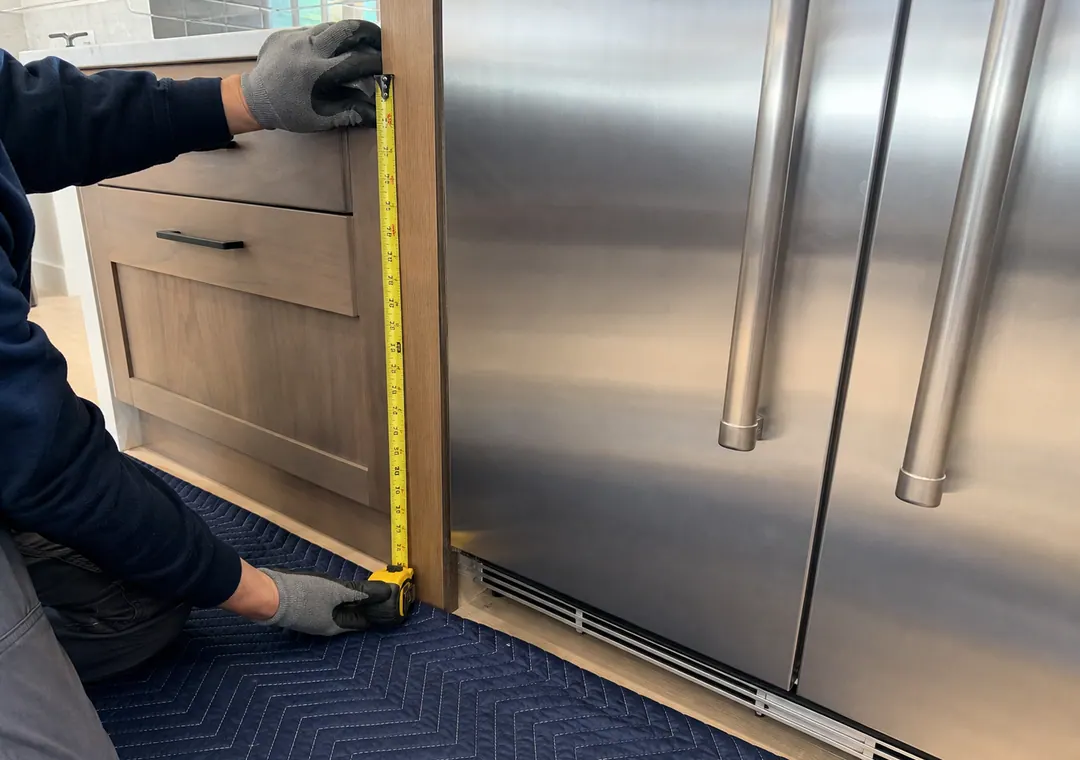
Built-in Sub-Zero replacement can disturb panels, toe kicks, floors, water lines, electrical access and the finished opening. That is why a simple percentage rule can mislead Lafayette owners.
The decision should ask whether the existing cabinet is worth preserving, whether a verified part path exists and whether the kitchen schedule makes repair or a new unit less disruptive. If repair wins the math, scheduling a verified Sub-Zero diagnosis keeps the decision anchored to part availability rather than guesswork.
A repair-vs-replace discussion before guests arrive should not pretend the event and the long-term decision are the same question. The event question is whether the current unit can be diagnosed, stabilized or repaired safely in time. The long-term question is whether the confirmed failure, part availability and cabinet disruption justify keeping the existing built-in.
For Happy Valley and Reliez Valley kitchens, the cabinet can turn a simple appliance calculation into a millwork calculation. Panel fit, toe-kick condition, floor protection, water-line routing and the finished opening should be documented before a homeowner compares repair cost to a new unit. A page that includes those questions is more useful than a generic age rule.
| Decision question | Short-term event answer | Long-term cabinet answer |
|---|---|---|
| Can food or wine be protected today? | Move risk items and record readings. | Does not decide the future of the unit. |
| Is a verified repair path available? | May stabilize the event if parts are common. | Supports repair when cabinet disruption is high. |
| Is sealed-system evidence confirmed? | May require risk triage first. | Can move the economics toward a new unit. |
| Is remodel work planned? | May reduce urgency for a permanent repair. | Can make a new opening more sensible. |
Lafayette route logic
Hillside access, larger built-in kitchens and pre-event scheduling make model-tag details and cabinet access notes useful before the route is set.
Afternoon heat, dust and route timing can change whether same-day triage or next-day prepared service is more realistic.
Family kitchens often need practical freezer, ice maker and gasket checks that protect floors and panels during routine service.
Homes near the Lafayette-Moraga Trail benefit from clear parking, gate and access notes so tools reach the built-in safely.
Visible answers
Repair can still make sense when the failure is verified, parts are available and replacement would disturb custom panels or floors. Replacement should be considered when sealed-system cost, part availability, age and remodel timing make repair a poor use of the cabinet opening.
Repair often makes sense when the failure is verified, parts are available, the cabinet is in good condition and the cost is far below the disruption of changing the built-in opening.
Consider a new unit when the appliance is very old, parts are unavailable, multiple major systems are failing, sealed-system cost is high or a kitchen remodel is already planned.
Yes. Before guests arrive, a limited repair or stabilization may be useful even if a longer-term replacement conversation happens later. The site separates event triage from final economics.
No. Sealed-system work should be approved only after pressure, electrical and model-specific evidence. Airflow, fan, gasket and sensor issues should be ruled out first.
Have model, serial, symptom, age if known, temperatures, cabinet notes and whether remodel work is planned. That information makes the first range more honest.
It can when the gasket or hinge issue is the verified cause of warm-air load. A $450-$950 gasket path is different from major sealed-system evidence.
Call now or book online for a diagnostic visit.