Lafayette Sub-Zero Appliance Repair logo mark Lafayette Sub-Zero Appliance RepairGuest-ready Sub-Zero evidence guide

Symptom diagnosis · Lafayette · 94549

Sub-Zero freezer not freezing in Lafayette

When the freezer drifts warm but the refrigerator is still cold, the fault is almost always in the freezer's own system — not the whole appliance. Here is why dual refrigeration makes that possible, and how to tell a drawer-freezer problem from a column-freezer one before you call.

4.9/5 · 987 verified customer reviews

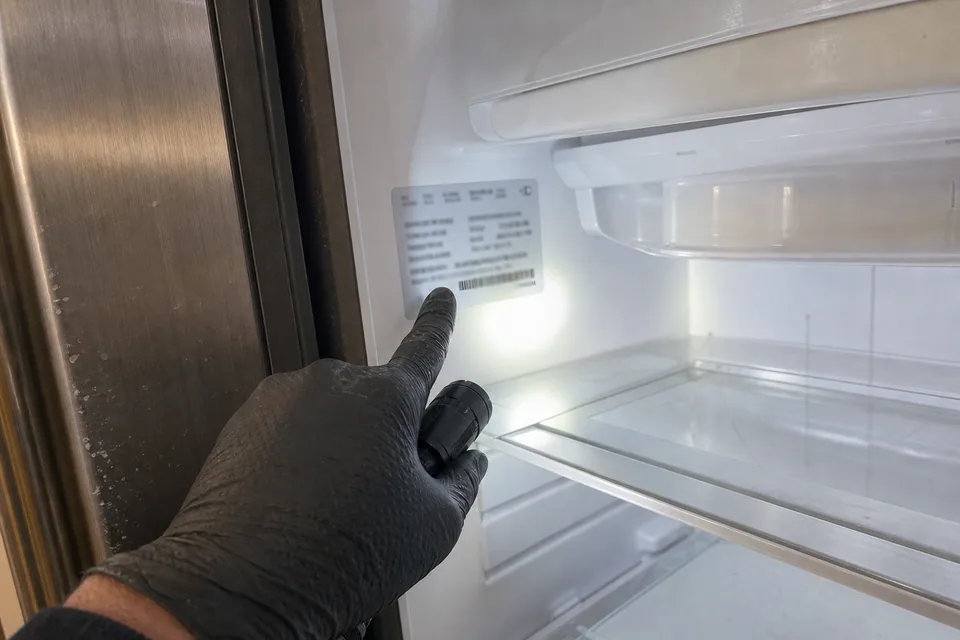
Checking freezer airflow and the evaporator fan on a Sub-Zero in a Lafayette kitchen

One of the questions we field most often from Lafayette owners is some version of "the fridge is fine, so why is the freezer warm?" It feels like a contradiction, and on most ordinary refrigerators it would be. On a built-in Sub-Zero it is not, and understanding why points you straight at the repair.

Sub-Zero built its reputation on dual refrigeration: the fresh-food compartment and the freezer each get their own evaporator coil, and on many column and side-by-side models their own compressor as well. The idea is that the freezer's dry, deep cold never mingles with the moist, milder air of the fridge, so food keeps longer. The practical consequence for a homeowner is that the two halves can fail independently. The fresh-food side can hold a flawless 38 F while the freezer quietly climbs to 15 or 20 F, because the part that keeps the freezer cold is a separate system with its own coil, fan and defrost cycle. So a warm freezer next to a cold fridge is not a paradox — it is the signature of a freezer-only fault.

The usual freezer-only faults

What actually warms the freezer while the fridge holds

Frosted evaporator / defrost failure

If the defrost heater, sensor or timer quits, frost stops being melted off the freezer evaporator and slowly armors it in ice. Air can no longer move across the coil, so the cabinet warms even though the compressor is running. The tell is a thick frost sheet on the back wall and a unit that recovers briefly after a manual thaw.

Stalled evaporator fan

The freezer has its own fan pushing cold air off the coil through the compartment. A seized fan motor or a blade jammed by ice leaves the coil cold but the cabinet warm — the cold is being made and never delivered. Common after a frost-up has been left to build.

Drawer or door seal leak

A tired gasket, a sagging hinge, or simply an overfilled drawer that will not shut flush lets warm room air bleed in continuously. In an open Lamorinda great-room kitchen that runs warm in the afternoon, that leak alone can hold a freezer five to ten degrees above target.

Sealed-system or sensor fault

Less often, the freezer's own sealed system loses capacity or a thermistor misreports the temperature so the control never calls for enough cold. We confirm this last, with readings, because it is the costliest path and we will not quote it on a guess.

Readings to log first

Get the evidence before you book

  1. Log both compartment temperatures. Put a thermometer in a glass of water in the fridge and a second one in the freezer for a couple of hours. A fridge near 38 F with a freezer that reads 10, 20 or 30 F instead of near 0 F confirms this is a freezer-only fault, not a whole-unit failure.
  2. Look for frost on the freezer back wall. A heavy ice build-up on the back interior panel, or ice creeping over the bottom basket, points at a defrost-cycle problem. A bare, frost-free evaporator with a freezer that still will not get cold points the other way, toward airflow or the sealed system.
  3. Check the drawer or door seal and how it is loaded. On drawer freezers especially, an overfilled basket or a bag caught in the gasket holds the drawer open a hair. Run a dollar bill around the seal; if it slides out with no drag, warm Lafayette kitchen air is leaking straight in.
  4. Listen for the evaporator fan and note timing. With the freezer open and the light switch held, you should hear the freezer's evaporator fan. Silence there, or a freezer that recovers for a few hours after a manual defrost then drifts warm again, is the evidence a technician needs. Write down what you saw before booking.

Those four readings — both temperatures, the frost pattern, the seal, and the fan — usually narrow a warm-freezer call to one or two causes before a technician arrives, which keeps the visit short and the quote honest.

Why Lafayette kitchens see this

Drawer freezers in hot, west-facing great rooms

A lot of the freezer calls we run in Lafayette come from the same kind of kitchen: a postwar Burton Valley or Reliez Valley house opened up into a bright great room, with the refrigeration dropped into a tall cabinet run or an island-adjacent column. Those rooms are wonderful to cook in and hard on a freezer. They face west, they fill with late-afternoon sun off the inland hills, and once the marine layer falls away east of the Caldecott the room can sit in the high 80s or 90s for hours. A drawer freezer at the bottom of a French-door unit feels every degree of that, because each time the drawer opens into a warm room it has to claw the cold back.

Add a gasket that has stiffened over the years and a basket that gets packed for entertaining, and a drawer freezer in one of these rooms can drift warm without anything actually being broken — the seal and the loading are the whole story. On taller freezer columns the more common villain is the defrost cycle, because there is simply more coil to ice over. Knowing which kind of unit you have tells us where to look first, which is why we ask before we drive out.

Not the same problem?

When it is not just the freezer

If the fresh-food side is warming too, this is a whole-unit issue — start with the not-cooling diagnostic. If a frosted-up freezer has started shedding melt onto the floor, see leaking water on the floor, because a defrost fault can cause both at once. A weak door or drawer seal is its own repair — the door gasket and seal guide covers it — and for what a worn-out unit is worth fixing, the Lafayette cost ranges and the error-code and alarm guide fill in the rest.

FAQ

Warm-freezer questions

Why is my Sub-Zero freezer not freezing but the fridge is still cold?

Most built-in Sub-Zeros use dual refrigeration — the fresh-food side and the freezer have their own evaporators and, on many models, their own compressors. So the fridge can hold 38 F while the freezer fails on its own: a frosted evaporator, a defrost-heater or sensor fault, a stalled freezer evaporator fan, or a drawer seal letting warm air in. Because the two systems are separate, a warm freezer with a fine fridge is normal Sub-Zero behavior for these faults, not a contradiction.

Is this the same as a Sub-Zero not cooling?

No, and the difference matters. 'Not cooling' usually means the fresh-food side is warming; 'freezer not freezing' means the freezer alone is drifting up while the fridge is fine. On a dual-refrigeration unit they are often entirely different repairs on different systems, so we treat them as separate diagnoses. If both compartments are warming together, start with the not-cooling diagnostic instead.

My Sub-Zero is a drawer freezer at the bottom — is that different from a column?

Slightly. A bottom drawer freezer relies on the drawer gasket and the basket loading staying clean; a packed drawer or a bag in the seal is a common, cheap cause of a warm drawer. A tall freezer column has more evaporator surface and a longer defrost path, so frost-up and defrost faults show up more there. We diagnose both, but we look at the seal and loading first on a drawer.

How cold should a Sub-Zero freezer actually be?

Around 0 F is the target for safe long-term freezing. Anything that settles in at 10 F or higher will soften ice cream, let frost migrate, and eventually thaw stored food, even if it still feels cold to the hand. If yours has parked above 5 F, log the reading and call (925) 940-3576; every visit starts with an $89 diagnostic that applies to the repair.

Freezer warm, fridge fine? Book Lafayette service

Tell us the model and both compartment temperatures and you will get a real first opinion before any work begins. We are an independent repair company — not factory-authorized — so you book us directly.

Call NowBook Online