Why it happens here
Hard inland water is what scales the drain
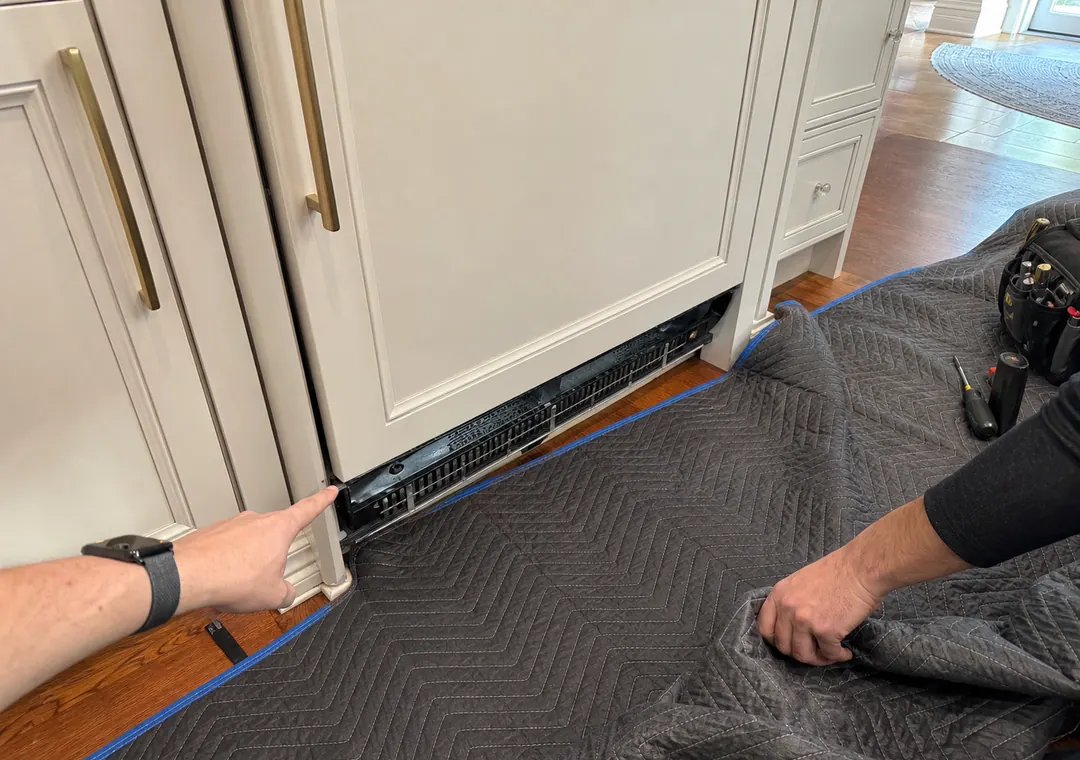
Lafayette sits on the dry, inland side of the Caldecott, and the water that comes to 94549 kitchens is genuinely hard. That mineral content is the quiet reason so many local defrost-drain leaks start: scale builds in the narrow condensate trough and on the small rubber check-valve at the bottom of the freezer until the channel is too tight for melt water to clear. The drain freezes, backs up, and the first sign you get is a puddle at the toe-kick. It is also why the same fix — clearing and flushing the drain, replacing a hardened check-valve — tends to hold for years once it is done properly, rather than the leak simply returning.
Heat plays a part too. On the string of 90-degree afternoons that settle over the inland Lamorinda hills every summer, the compressor runs longer, the unit sheds more condensate, and a drip pan or evaporation path that just barely coped in spring can overflow at the front edge in August. We see the leaking-water calls cluster in the first real heat wave for exactly that reason.