Lafayette Sub-Zero Appliance Repair logo mark Lafayette Sub-Zero Appliance RepairGuest-ready Sub-Zero evidence guide

Symptom diagnosis · Lafayette · 94549

Sub-Zero making a loud noise or buzzing in Lafayette

A built-in Sub-Zero is never truly silent — the trick is telling a normal hum, whir or click from the grind or buzz that means something is wrong. Here is how to map the sound to its source, and which noises are safe to run and which mean stop.

5.0/5 · 1,911 verified customer reviews

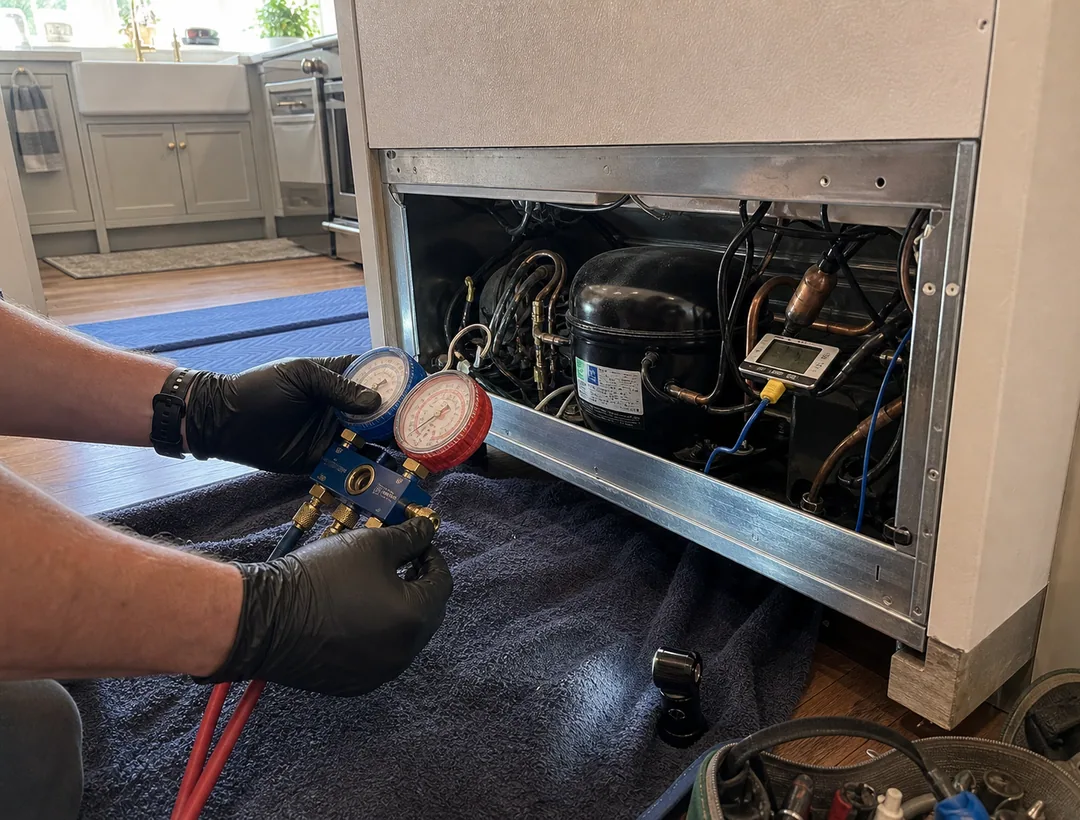
Diagnosing compressor and fan noise on a built-in Sub-Zero in a Lafayette kitchen

Noise complaints have a particular shape in Lafayette, and it has everything to do with how these kitchens are built. The open great rooms that so many local remodels produced put the refrigerator and its machinery a few feet from the sofa and the dining table, with no wall to absorb anything. A compressor hum or a fan whir that would vanish behind a closed galley door instead carries across the room, so a Lafayette homeowner notices a change in their Sub-Zero's voice long before anyone in a more compartmented house would.

That sensitivity is useful, because a refrigerator tells you a great deal through sound if you know how to listen. Almost every Sub-Zero noise traces back to one of four sources — the evaporator fan inside the freezer, the compressor and condenser fan behind the lower grille, or the normal clicks of the defrost and valve cycle. Place the sound, and you have most of the diagnosis before a technician ever opens the unit.

Map the sound to the cause

What each noise usually means

Whir or grind from inside the freezer

The evaporator fan. A smooth whir is normal; a grinding, scraping or warbling note usually means the blade is clipping a frost build-up or the motor bearing is failing. This is the noise most likely to come with a freezer that is also drifting warm.

Hum or low drone from the bottom

The compressor. A steady, soft hum is healthy and constant. A louder buzz, an electrical hum that wavers, or a hum that arrives just as the unit stops cooling can mean a struggling compressor or start relay and is worth stopping for.

Rattle or vibration at the grille

The condenser fan or a loose part. A dust-clogged condenser fan, a misaligned drip pan, or a panel vibrating against the cabinet produces a rattle that sounds alarming but is usually a simple, low-cost fix once located.

Clicks, ticks and a brief hiss

The defrost timer and the refrigerant valves doing their job. Sharp clicks a few times a day, sometimes with a short hiss or a trickle of water afterward, are entirely normal cycle sounds and not a fault at all.

Quick checks

Pin it down before you call

  1. Locate the sound: top, bottom or inside. Stand at the unit and place where the noise lives. A whir or buzz from inside the freezer is usually the evaporator fan; a hum or rattle from the bottom grille area is the compressor or condenser fan; sharp clicks come and go with the defrost and valve cycle.
  2. Note when it happens and how long it lasts. A constant drone that never stops is different from a noise that ramps up for an hour then fades. Time it against the door: if the fan note changes pitch or grinds when you open the freezer, the evaporator fan is the suspect.
  3. Pull the grille and look for an obvious cause. With the bottom grille off, check that nothing is touching the condenser fan and that the unit is not vibrating against the cabinet. A loose drip pan or a panel buzzing in sympathy is a common, harmless rattle that is easy to confirm.
  4. Decide safe-to-run or stop, then record it. Soft hums, gentle whirs and occasional clicks are normal. A loud metallic grind, a hard knock, or a buzz paired with a unit that is also warming means stop running it and call. Note the sound, the location and the timing before you book.

The single most useful thing you can tell us on the phone is where the sound is and when it happens. A noise from the freezer that grinds on the door swing is a different visit from a steady drone at the grille, and naming it lets us bring the right part on the first trip.

Why it gets louder here

Inland heat means longer run cycles

The reason a Sub-Zero often turns noisier in summer rather than winter is run time. Once you clear the Caldecott and the cooling marine air drops away, the inland Lamorinda hills bake, and a kitchen in Happy Valley or up near the Reservoir can hold the high 80s and 90s through the afternoon. The compressor and condenser fan answer that heat by running far more hours than they would in a cooler coastal kitchen, and the more they run, the more an aging bearing or a slightly out-of-balance blade gets to announce itself.

Dust compounds it. The dry inland season coats the condenser behind the lower grille, the fan has to work harder to push air through it, and the whole unit runs hotter, longer and louder. That is why a great many "my Sub-Zero got loud" calls in Lafayette resolve not into an expensive part but into a clean condenser, a freed fan, or a re-seated panel — and why we check those cheap, common causes first before anyone talks about a compressor.

Not the same problem?

If the noise comes with other symptoms

A grinding evaporator fan often travels with a freezer that is not freezing, because the same ice that warms the box is what the blade is hitting. A compressor buzz paired with a warm fresh-food side belongs in the not-cooling diagnostic, and deeper compressor and sealed-system noises are covered in the sealed-system guide. If an alarm tone is part of the noise, check the error-code and alarm guide; for repair economics on an older, loud unit, see the Lafayette cost ranges.

FAQ

Noisy Sub-Zero questions

What does a normal Sub-Zero sound like, and what is a warning sign?

A healthy built-in makes a soft compressor hum, a low fan whir, occasional water trickling, and sharp clicks or a brief hiss when the defrost cycle and refrigerant valves switch — all normal. Warning sounds are a loud metallic grinding or scraping (often an evaporator fan hitting ice), a hard rhythmic knock from the compressor area, or a heavy buzz that arrives as the unit also starts running warm. Normal noises you can live with; those three you should not.

Why is my Sub-Zero suddenly louder than it used to be?

Two things make a built-in noisier over time: a fan or motor bearing starting to wear, and the unit simply running longer. On the inland side of the Caldecott, a Lafayette kitchen that climbs into the 90s in summer forces the compressor and condenser fan to run far more hours than a coastal kitchen, so a fan that was always slightly noisy becomes obvious, and a dust-loaded condenser makes everything work harder and louder.

Is the buzzing or humming dangerous?

A steady low hum is just the compressor and is fine. A loud electrical buzz, especially one that coincides with the unit not cooling, can be a struggling compressor or a relay and is worth stopping for. Because the compressor and condenser fan live behind the lower grille in an open Lafayette great room, that buzz often carries into the living space, which is usually what prompts the call.

Can I keep using a noisy Sub-Zero until a technician comes?

If it is a soft hum, whir or click and the unit is still holding temperature, yes. If you hear a grinding fan, a hard knock, or a buzz with rising temperatures, switch it off to protect the part and the food, and call (925) 940-3576. Every visit opens with an $89 diagnostic that applies to the repair, backed by our 365-day warranty.

Loud or buzzing unit? Book Lafayette Sub-Zero service

Describe where the sound is and when it happens and you will get a clear plan before any work begins. We are an independent repair company — not factory-authorized — so you book us directly.

Call NowBook Online